How to Choose the Right Garden Turf for Your Landscape Needs?
Choosing the right Garden Turf is crucial for any landscape project. The perfect turf enhances your outdoor space and impacts your garden's functionality. With diverse options available, understanding the specific needs of your garden becomes essential.
Not all turfs are created equal. Factors like climate, foot traffic, and aesthetic goals play significant roles. For instance, some grass types thrive in sunny areas, while others prefer shade. It’s important to evaluate your landscape's unique conditions before deciding. Color, texture, and growth habits can also influence your decision.
In this selection process, mistakes are common. Many gardeners choose based on appearance alone, disregarding practical aspects. Rushing can lead to poor choices and disappointing results. A thoughtful approach will guide you toward the best Garden Turf for your needs. Reflect on your landscape requirements and make an informed decision.
Understanding Different Types of Garden Turf Available in the Market
When selecting garden turf, understanding the types available is crucial. Various types of turf cater to different needs. The most common include cool-season grasses and warm-season grasses. According to the Lawn Institute, cool-season grasses thrive in northern climates, while warm-season grasses flourish in southern areas. These distinctions affect lawn care practices, growth speed, and resilience.
For instance, Kentucky bluegrass is popular for its lush appearance. However, it requires regular watering and is more susceptible to diseases. Conversely, Bermuda grass is drought-resistant and ideal for sunny areas. Data from the American Society of Landscape Architects indicates that a large portion of homeowners prefer easy-to-maintain options, especially in regions with erratic weather patterns.
Choosing the right turf also means considering soil quality. Poor soil can lead to uneven growth, requiring more inputs to maintain. Some turf types are better suited for challenging soil conditions than others. For example, fescue grass tolerates shaded areas and poor soil but may require additional care to reach its full potential. Each choice comes with trade-offs, making informed decisions vital for long-lasting results.
Garden Turf Types and Their Characteristics
Assessing Your Landscape Needs and Environmental Conditions
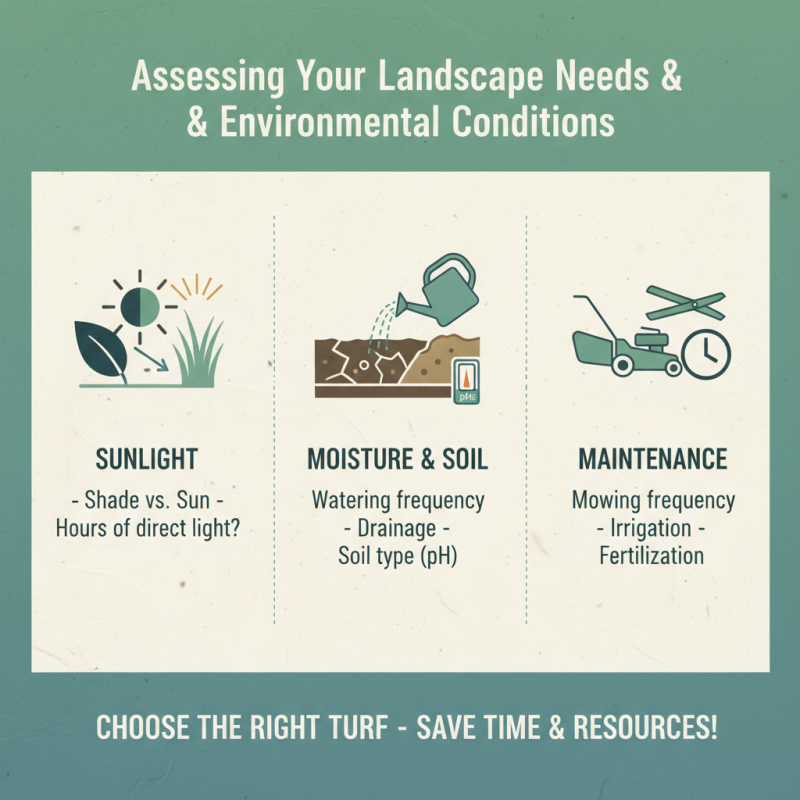
When choosing the right garden turf, understanding your landscape needs is essential. Different areas may have varying sunlight, moisture, and soil conditions. For instance, a shady garden won't support the same grass type as a sun-drenched lawn. Assessing the sunlight your yard receives can help determine the best variety. Think about how often you need to water or mow. This might save time and resources.
Consider the type of activities your garden will see. Playgrounds, pets, and gatherings can wear grass down quickly. Some types cope better with traffic, while others may not. Reflecting on these factors is crucial. Ask yourself: "How much wear can this area handle?" Also, local climate matters. Is it humid or dry? Each turf type thrives under specific environmental conditions. Taking the time to observe and analyze your space creates a better foundation for a flourishing lawn.
Evaluating Turf Quality and Maintenance Requirements
Choosing the right garden turf involves assessing its quality and maintenance requirements. Not all turfs are created equal. High-quality turf usually has a heavier density, which helps it withstand wear and tear. The American Society of Landscape Architects suggests looking for turfs with at least 300,000 to 600,000 grass plant per square meter.
Maintenance requirements vary significantly among different turf types. Some varieties may need weekly mowing, while others are low-maintenance and only require occasional trimming. A study by the Turfgrass Water Conservation Alliance highlights that water usage can differ as much as 50% between drought-resistant and traditional grass types. Selecting low-water options can reduce costs significantly over time, especially in arid regions.
However, many homeowners underestimate the time commitment required for upkeep. Fertilizing, aerating, and pest control can quickly become overwhelming. Often, people assume that once turf is laid, it will thrive on its own. Yet, turf health directly impacts overall landscape aesthetics. It’s essential to educate oneself on the specific care needs of the chosen turf type to avoid frustration in the long run.
How to Choose the Right Garden Turf for Your Landscape Needs?
| Turf Type |
Durability |
Maintenance Level |
Water Requirements |
Sunlight Tolerance |
| Kentucky Bluegrass |
High |
Moderate |
Moderate |
Full sun |
| Perennial Ryegrass |
Moderate |
Low |
Low |
Partial shade |
| Fescue |
High |
Moderate |
Low |
Partial sun |
| Bermudagrass |
High |
High |
High |
Full sun |
| Zoysiagrass |
Moderate |
Moderate |
Moderate |
Full sun to partial shade |
Considering Aesthetic Preferences and Usage Patterns
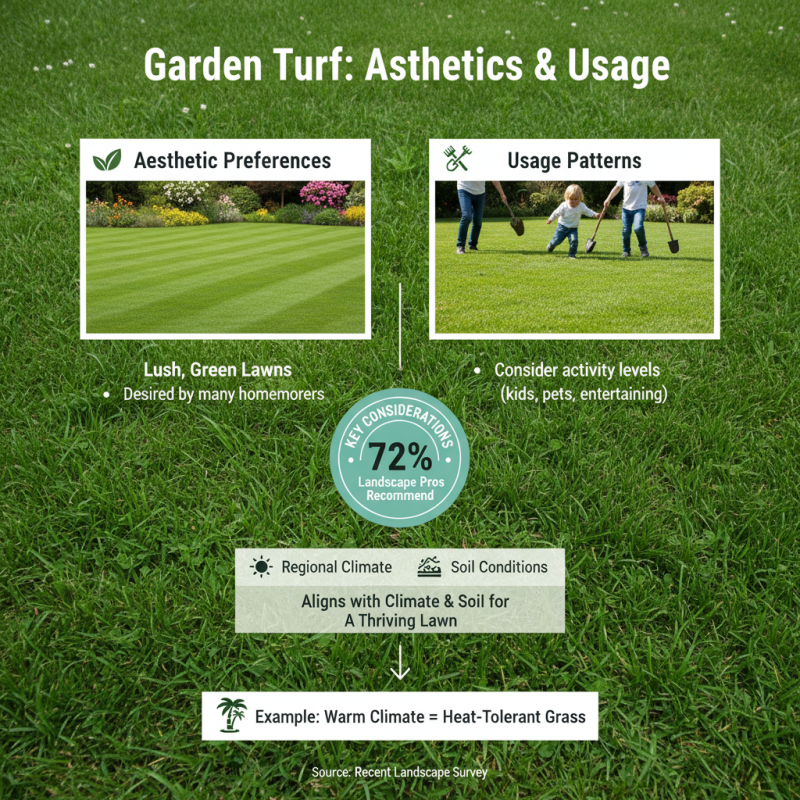
Choosing the right garden turf involves understanding your aesthetic preferences and usage patterns. Many homeowners desire lush, green lawns. According to a recent survey, 72% of landscape professionals recommend selecting turf that aligns with regional climate and soil conditions. For example, selecting a grass variety suited for warm climates will ensure a thriving lawn.
Consider how you plan to use your yard. For high-traffic areas like play zones, durable turf is essential. The same survey indicates that turf types like perennial ryegrass are popular for active families due to their resilience. However, some people may overlook the maintenance aspect. A beautiful lawn requires regular care, including mowing and watering. It’s worth noting that 60% of homeowners admit they struggle to keep up with lawn maintenance.
Visual appeal matters greatly as well. Aesthetic preferences vary widely. Some might favor a smooth, manicured look, while others prefer a wild, natural appearance. This choice can influence your turf selection. An industry report highlights that grass with a deep green color can improve property values by up to 15%. Take time to reflect on what you truly want. Balancing beauty with practicality can be challenging but rewarding.
Budgeting for Installation and Long-Term Care of Turf Options
When planning your landscape, budgeting for turf installation and maintenance is crucial. According to the National Association of Landscape Professionals, homeowners spend an average of $1 to $2 per square foot for turf. This cost may vary based on the type of grass selected. Some options require more maintenance, which can inflate long-term care expenses.
Tips: Always consider the climate and soil type in your area. These factors impact the overall cost. For example, fescue thrives in cooler climates, while Bermuda is ideal in warmer regions. Installing turf that matches your environment can save money on water and maintenance.
Long-term care often includes irrigation, fertilization, and pest control. Studies indicate that effective maintenance can reduce your water bill by up to 30%. Be aware of hidden costs. Not all turf types are equally resilient, so research how well different grasses adapt. Some may require more frequent aeration or overseeding, which adds to expenses over time. Balancing initial costs with future upkeep is essential for a thriving landscape.

 +86 19005411400+86 15006803065
 Contact Phone
 Contact Email