+86 19005411400+86 15006803065


A Clear Waterproof Tarp is a transparent protective sheet designed to block rain while allowing light to pass through. Most products use reinforced PVC or polyethylene, with heat-welded seams, rust-resistant eyelets, and UV-treated surfaces. Unlike opaque tarps, clear materials preserve visibility and daylight around patios, market stalls, greenhouses, construction areas, and temporary storage spaces. That practical difference matters when workers need protection without creating a dark enclosure.
Industry research supports the wider demand for flexible protective materials. Grand View Research’s plastic films market analysis identifies construction, agriculture, and packaging as major application sectors. The Freedonia Group’s tarpaulin market coverage also links demand to weather protection, transport, and temporary outdoor structures. However, market estimates vary by material definitions and regional reporting. A precise number should be checked against the original report.
In real use, thickness and reinforcement deserve close attention. A lightweight tarp may suit a balcony divider, while a heavy-duty PVC tarp better handles repeated wind and handling. IFAI technical guidance emphasizes fabric strength, seam construction, and proper installation for outdoor performance. NOAA climate data can also help users assess local rainfall, wind, and seasonal exposure before choosing a specification. Clear does not mean fragile-proof. It may yellow, stiffen, or tear when UV exposure, sharp edges, and poor tension combine. That detail is often overlooked. A reliable evaluation should consider waterproofing, tear resistance, grommet spacing, flame performance, and safe anchoring. The best Clear Waterproof Tarp is not simply the thickest one; it is the product matched to the environment, load, and expected service life.
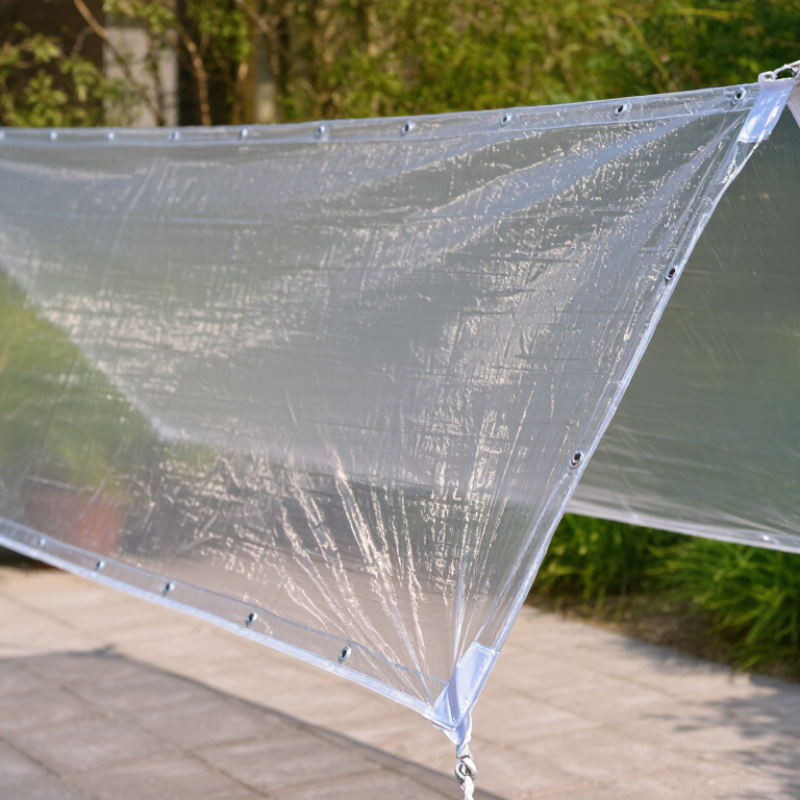
A clear waterproof tarp is usually made from transparent PVC film, coated fabric, or laminated mesh. PVC film blocks rain while allowing daylight through. This makes it practical for temporary walls, equipment covers, greenhouse repairs, patio enclosures, and construction barriers.
The common 20-mil construction grade measures 0.020 inches, or about 0.51 millimeters, thick. It offers a useful balance between flexibility and puncture resistance. However, thickness alone does not prove quality. Buyers should check welded seams, reinforced edges, grommet spacing, tensile strength, tear resistance, and hydrostatic pressure results. ASTM D751 provides recognized test methods for coated fabrics, including adhesion, tearing, and water resistance. Grand View Research’s 2024 tarpaulins market analysis identifies construction as a major end-use sector and projects continued market growth through 2030.
PVC film gives stronger rain protection, but it can trap heat under direct sunlight. Clear surfaces may also create glare on active work areas. Mesh tarps improve airflow and reduce wind load, but ordinary mesh is not fully waterproof. Laminated mesh provides better coverage, though it may still allow water through its weave or stitched points. I would not assume “clear” means safer or more durable. Field conditions matter. A sharp scaffold edge can damage even a thick tarp, while poor anchoring can cause uplift, pooling, and seam stress during storms. Read the technical data sheet, inspect the cover after installation, and replace it when cracks or clouding appear.
A clear waterproof tarp is a transparent coated fabric that blocks liquid water while admitting daylight. Its performance depends on coating thickness, seams, folds, and aging. A tarp may look flawless yet leak through a needle hole. That matters.
ASTM D751 evaluates coated fabrics by applying water pressure to a test specimen. The result records the pressure level that forces water through the material. Hydrostatic pressure is commonly reported in kilopascals or centimetres of water. For reference, one metre of water creates about 9.81 kPa, based on standard pressure relationships reported by NIST. Higher pressure usually indicates stronger resistance, but test results do not guarantee field performance. Seams can fail earlier. Installation can also distort the fabric.
The U.S. Geological Survey reports that one inch of rain over one acre equals approximately 27,154 gallons. This scale explains why clear tarps are used over temporary shelters, outdoor work areas, greenhouse sides, equipment, and construction materials. However, ASTM D751 tests controlled samples, not wind-driven rain or standing water. That limitation deserves attention.
Tips: Ask for the test method, pressure result, specimen condition, and seam data. Check whether results used new or aged material. A clear tarp should be inspected against strong light before installation. Tiny pinholes become obvious then. Proper slope matters more than many buyers expect.
A clear waterproof tarp is a transparent coated-fabric cover designed to block liquid water while allowing light to pass through. It is commonly used for temporary shelters, patio enclosures, greenhouse-style covers, construction protection, equipment storage, and outdoor weather barriers.
ASTM D751 includes hydrostatic-resistance procedures for coated fabrics. During a hydrostatic-pressure test, water pressure is applied to one side of the material and the pressure level at leakage is recorded. The chart shows calculated water pressure produced by different water-head heights, using p = ρgh. These are reference pressure values, not performance ratings for a specific tarp. In general, a material that withstands a higher pressure before leakage demonstrates greater resistance to water penetration.
A clear waterproof tarp is a transparent or translucent sheet designed to block rain while allowing light through. It is commonly used for patio covers, temporary shelters, greenhouse sides, outdoor work areas, and equipment protection. Unlike opaque tarps, it can keep a space bright during cloudy weather. You may still need artificial light at night.
Light transmission strongly affects comfort and plant growth. A highly transparent tarp provides a brighter view and reduces the need for daytime lighting. However, direct sunlight can create heat, glare, and uncomfortable hot spots beneath the sheet. A slightly translucent surface spreads light more evenly. In my experience, this often feels better, even when the material looks less perfectly clear.
UV ratings deserve careful attention. Some tarps list UV resistance by expected service life, while others provide test-based protection percentages. These ratings are not always directly comparable. A stronger UV treatment can slow yellowing, brittleness, and cracking, but it may not prevent every failure. Check the test method and storage conditions. Dust, standing water, sharp edges, and repeated folding can shorten real-world performance. I have seen a clear tarp remain flexible for years, while another showed haze and cracks much sooner than expected. That difference reminded me that clarity alone is not a complete quality measure. Examine seam strength, thickness, grommet placement, and the manufacturer’s care instructions before choosing one.
What Is a Clear Waterproof Tarp and What Is It Used For?
Choosing Sizes, Seams, Grommets, and Load Ratings for Specific Applications
A clear waterproof tarp uses transparent vinyl, polyethylene, or coated polyester to block rain while admitting daylight. It can cover patio furniture, greenhouse frames, building materials, or outdoor work areas. Choose a size with extra material for overlap and anchoring. A tarp stretched edge to edge often fails first. Allow 12 to 24 inches for folds, tension, and runoff control. Measure the covered area, then check whether the stated dimensions are finished or cut sizes.
Seams matter more than many buyers expect. Heat-welded seams usually resist water better than simple stitched seams. Reinforced edges reduce tearing around attachment points. Select brass or stainless-steel grommets for repeated outdoor use. Grommet spacing should match your rope, clips, or frame. Do not judge strength from fabric thickness alone. A listed load rating may describe tensile strength, grommet pull-out resistance, or the complete assembly. These are not interchangeable. Wind exposure, water pooling, and poor anchoring can reduce real performance sharply. I have seen a strong tarp fail because its corner reinforcement was too small.
Tips: Use rounded supports, not sharp metal edges. Leave a slight slope for drainage. Inspect grommets after storms. If the tarp will face strong sun, confirm its UV rating and expected service life. Clear material can become brittle over time, and visibility is not proof of fire resistance. When uncertain, choose a smaller span with more attachment points, though that may create extra seams and installation work.
A practical comparison of transparent waterproof tarp specifications for common residential, commercial, agricultural, and outdoor applications.
| Application | Recommended Size | Typical Material & Thickness | Seam Construction | Grommet Spacing | Indicative Load Rating | Selection and Installation Notes |
|---|---|---|---|---|---|---|
| Patio wind and rain screen | 8 × 10 ft to 10 × 20 ft | Clear PVC or PE; approximately 0.20–0.30 mm | Heat-welded hems with reinforced webbing | Every 18–24 in | Approx. 40–70 lb per reinforced grommet* | Use multiple attachment points and leave limited slack. A breathable gap at the top or sides helps reduce condensation and wind pressure. |
| Greenhouse or cold-frame cover | 6 × 8 ft to 12 × 20 ft | UV-treated clear polyethylene; approximately 0.15–0.25 mm | Continuous welded or taped seams; folded reinforced edges | Every 24 in, with extra corner reinforcement | Approx. 25–50 lb per grommet* | Choose UV-resistant film and avoid sharp framing members. Install with smooth support surfaces to reduce abrasion and tearing. |
| Temporary construction enclosure | 10 × 20 ft to 20 × 30 ft | Heavy-duty clear PVC; approximately 0.30–0.50 mm | High-frequency welded seams with double-layer hem | Every 12–18 in | Approx. 60–100 lb per reinforced grommet* | Use closer spacing on exposed edges. Do not rely on the tarp as fall protection, a lifting sling, or a permanent structural wall. |
| Boat or equipment enclosure | 10 × 20 ft to 20 × 40 ft | Clear coated polyester or PVC; approximately 0.25–0.45 mm | Welded or double-stitched seams with edge webbing | Every 18–24 in | Approx. 50–90 lb per reinforced grommet* | Provide airflow to limit mildew and condensation. Use soft straps or rope rather than abrasive wire directly against the tarp. |
| Truck, trailer, or load cover | 8 × 16 ft to 16 × 28 ft | Reinforced clear PVC or laminated PE; approximately 0.30–0.50 mm | Welded seams with perimeter webbing and corner patches | Every 12–18 in | Approx. 60–100 lb per reinforced grommet* | Select a size that covers the load without excessive overhang. Secure all edges; wind uplift can greatly exceed static weight. |
| Firewood or garden-material shelter | 8 × 10 ft to 12 × 16 ft | Clear PE or PVC; approximately 0.20–0.35 mm | Reinforced folded hem with welded seams | Every 18–24 in | Approx. 40–75 lb per grommet* | Slope the cover so rainwater drains away. Keep the tarp away from hot chimneys, open flames, and surfaces that can exceed the material temperature limit. |
| Outdoor event or market sidewall | 8 × 10 ft to 10 × 20 ft | Clear PVC with UV protection; approximately 0.25–0.40 mm | Welded seams with reinforced perimeter and optional hook-and-loop edges | Every 12–18 in | Approx. 50–90 lb per grommet* | Use ballast and a stable frame. Transparent panels improve visibility but can increase wind loading; never use a loose panel in severe weather. |
| Indoor dust or splash partition | 6 × 8 ft to 10 × 20 ft | Light clear PE or vinyl; approximately 0.10–0.25 mm | Heat-sealed or lightly reinforced hems | Every 24–36 in | Approx. 20–45 lb per grommet* | Suitable for temporary separation and splash control. Use flame-retardant material where required by the building or workplace regulations. |
Important: Clear waterproof tarps are commonly made from transparent PVC, polyethylene, or coated fabric. The load figures above are indicative planning ranges, not certified working-load limits. Actual performance depends on material grade, grommet size, edge reinforcement, seam quality, attachment method, temperature, UV exposure, and wind. Never use a tarp for fall arrest, overhead lifting, or other life-safety applications unless it has been specifically certified for that purpose.
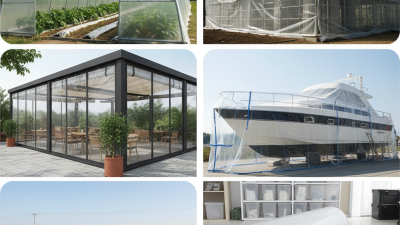
A clear waterproof tarp is a flexible sheet made from coated PVC or polyethylene. It blocks rain while allowing daylight through. Construction teams use it for temporary walling, scaffold covers, concrete protection, and material storage. The U.S. Census Bureau reported construction spending at about $2.15 trillion annualized in December 2024. On active sites, a transparent cover can improve visibility around tools and walkways. It can also reduce wind-driven rain. Poorly fixed tarps remain dangerous, though.
Agricultural users place clear tarps over seedlings, hay, machinery, and temporary work areas. The 2022 Census of Agriculture recorded nearly 1.9 million U.S. farms. That scale explains the demand for simple, reusable weather protection. A tarp can retain warmth inside a small growing tunnel, but excessive heat may damage crops. Ventilation openings matter. This detail is easy to overlook.
At events, clear tarps protect dining areas, stages, lighting equipment, and temporary entrances without creating a dark enclosure. UFI’s Global Economic Impact and Trends report estimated that business events supported 10.3 million jobs worldwide. Transport operators use tarps for cargo covers, roadside repairs, and short-term loading protection. They must still follow applicable cargo-securement rules. A loose edge can flap, tear, or obscure visibility. For outdoor protection, clear tarps cover boats, firewood, bicycles, and patio furniture. Choose reinforced hems, rust-resistant eyelets, suitable thickness, and enough overlap. No tarp lasts forever. Sunlight slowly weakens many materials.