10 Essential Tips for Choosing the Best Playground Turf for Your Kids?
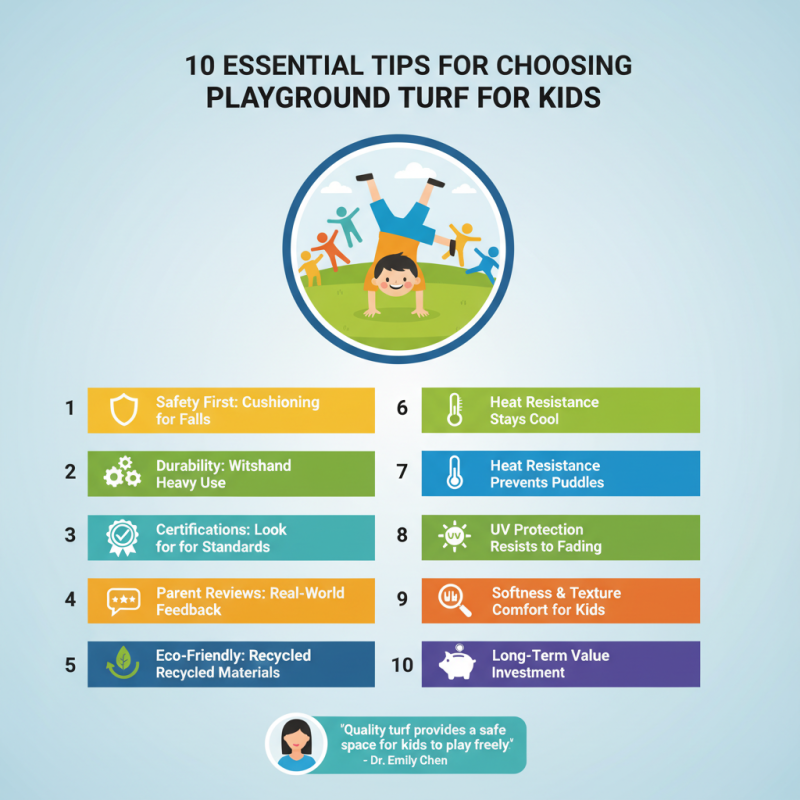
Choosing the right Playground Turf is crucial for the safety and enjoyment of children. According to Dr. Emily Chen, a leading expert in artificial grass for play areas, “Quality turf provides a safe space for kids to play freely.” Parents often overlook this vital aspect when designing play spaces.
Selecting Playground Turf involves more than color and texture. Consider the material's durability and safety ratings. The surface should cushion falls and minimize injuries. Not all products hold up well under heavy use. Check for certifications and reviews from other parents. Once, I saw turf that faded quickly after just a few months. This can lead to disappointment and safety risks.
Furthermore, find turf that is environmentally friendly. Options made from recycled materials not only benefit children but also the planet. Investing wisely now can save on future replacements. Remember, making informed choices in Playground Turf ensures your kids have a safe and fun environment for play.
Understanding the Different Types of Playground Turf Available
Choosing the right playground turf is vital for your kids' safety and enjoyment. Understanding the various types of turf available can help you make an informed decision. There are roughly three main options: natural grass, synthetic turf, and rubber mulch. Each type has its own set of characteristics and potential drawbacks.
Natural grass provides a soft, cushioning surface. It allows for a more natural environment but requires regular maintenance. Weather can also impact playability, creating muddy patches after rain.
Synthetic turf, on the other hand, is low-maintenance, easy to clean, and offers consistent performance. However, it can become hot in direct sunlight and may not provide the same play experience as natural grass.
Rubber mulch is popular for its shock absorption properties but can be challenging to clean and may retain moisture, making it harder for kids to play.
When selecting turf, consider the age of the kids and the type of play they’ll engage in. Look for options that prioritize safety and durability. Always check for certifications, as these ensure the materials are safe for children. Remember to weigh the pros and cons carefully. Opt for a turf that balances playability and upkeep to suit your environment.
Evaluating Safety Standards and Certifications for Playground Turf
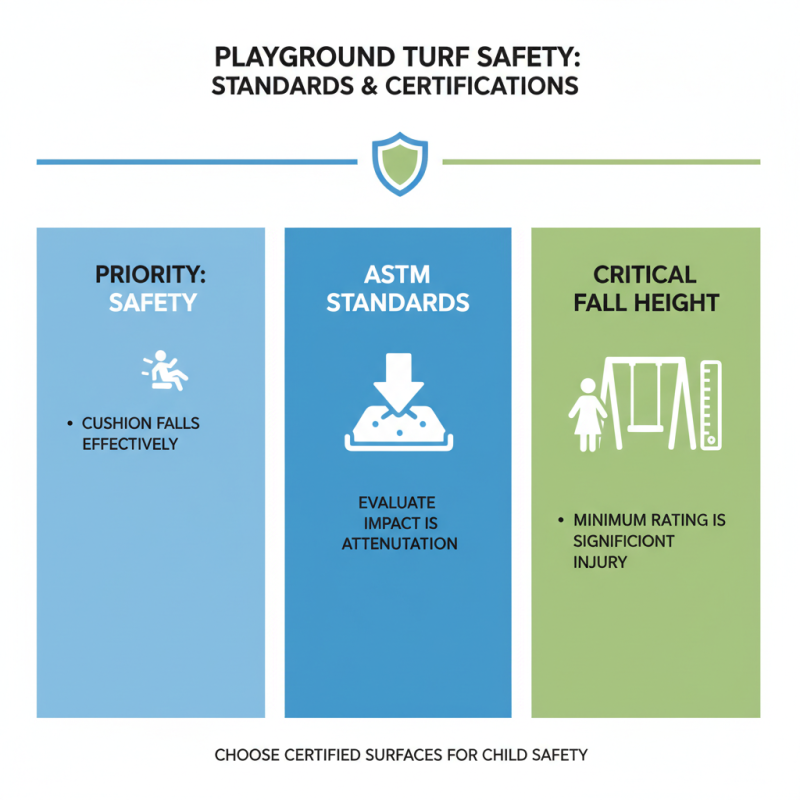
When selecting playground turf, safety standards should be your priority. Look for surfaces that meet or exceed ASTM standards, which evaluate impact attenuation. These standards ensure that the turf can cushion falls effectively. Choosing turf with a minimum Critical Fall Height rating is crucial. It indicates the height from which a child can fall without significant injury.
Certifications matter, too. Options like the International Play Equipment Manufacturers Association (IPEMA) signify rigorous testing. Such endorsing bodies ensure that the turf meets safety requirements for children. Remember that not all products on the market have this certification. If a turf lacks proper accreditation, its safety is questionable.
Evaluate the materials used in the playground turf. Non-toxic and environmentally safe options are preferable. This also impacts the turf's durability. Synthetic can break down over time, while natural fibers might not offer the same cushioning benefits. It’s essential to consider all these aspects carefully. Your choice affects kids’ playtime experiences and safety.
Assessing Durability and Maintenance Requirements for Long-lasting Use
Choosing the right playground turf involves assessing its
durability and maintenance needs. Many parents overlook this crucial aspect.
According to a report by the American Society for Testing and Materials (ASTM), quality turf
can last between 8 to 15 years, if properly selected and maintained. This makes it essential
to evaluate materials used in turf.
One common option is nylon, known for its strength. Yet, it can be
more challenging to maintain than polyethylene, which offers a
softer feel and easier upkeep. An ideal choice balances both durability and comfort. Studies suggest that
well-maintained turf reduces the risk of injuries by providing better shock absorption. However, turf
requires regular inspections. Infrequent checks can lead to hidden damages.
Maintaining turf also involves cleaning to prevent
mold and bacteria buildup. A general guideline
is to disinfect the surface quarterly. Yet, many facilities neglect this, risking health concerns. Invest
in a turf that is not only durable but also aligns with your
maintenance capabilities. It’s a long-term commitment. Don't just focus on
aesthetics; consider longevity and your ability to care for the playground.
Considering Factors Like Climate and Usage Patterns in Turf Selection
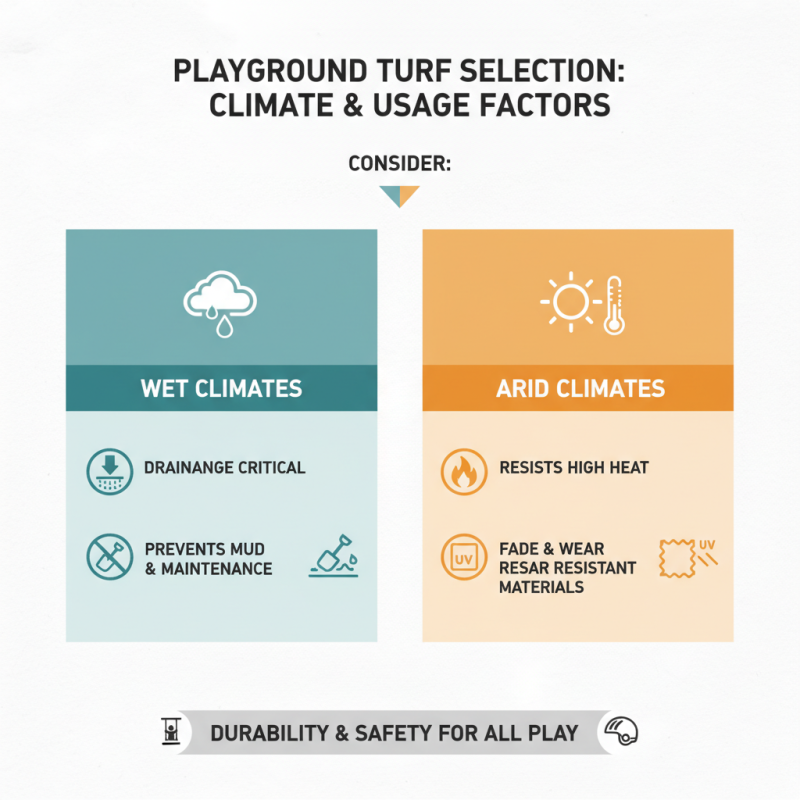
When selecting playground turf, climate is a crucial factor. Different climates pose various challenges. For instance, in wet regions, drainage is critical. Turf that retains water can lead to muddy surfaces and maintenance issues. Conversely, in arid zones, choose turf that withstands high heat. Some materials may fade or wear out under intense sunlight.
Usage patterns also play a significant role. If the playground will see heavy foot traffic, consider turf designed for durability. Some options are better suited for active play, while others may not hold up as well. Think about the types of activities your kids will engage in. Slides, swings, and climbing structures all exert different forces on the turf as children run and play.
It’s easy to overlook the importance of regular maintenance. Turf requires care to remain safe and usable. Even the most durable options need periodic checks for safety. Reflect on how often you can commit to upkeep. This can dictate your choice of materials. Sometimes, the most popular choices may not fit your needs perfectly. Always weigh the pros and cons of different turf options.
Budgeting for Installation and Long-term Care of Playground Turf
When budgeting for playground turf installation, various costs come into play. It’s not just about the initial purchase. Research shows that ongoing maintenance can add up to 20% of the initial investment each year. Proper budgeting will ensure that the turf remains safe and enjoyable for your children.
Consider a few essential tips. First, evaluate your local weather conditions. Regions with high rainfall may need more durable turf that can withstand wet conditions. Also, think about age-appropriate materials. Turf designed for younger kids may differ from that for older children, affecting installation costs.
Ensure you include maintenance in your financial plan. Regular checks for damage can prevent costly replacements. A study indicates that well-maintained playground surfaces reduce injuries by up to 50%. Long-term care may involve cleaning schedules, occasional infill replenishment, and antimicrobial treatments. These factors are crucial for a safe playground experience for your kids.

 +86 19005411400+86 15006803065
 Contact Phone
 Contact Email