Top 10 Best Landscape Artificial Grass Options for Your Garden?
Artificial grass has become increasingly popular for gardens. It provides a lush, green appearance with minimal maintenance. As John Stevens, a landscape designer and expert in the Landscape Artificial Grass industry, stated, "Choosing the right synthetic turf can transform any garden space." His insights emphasize the importance of quality when selecting artificial grass.
Landscape Artificial Grass offers numerous benefits. It can withstand harsh weather and requires no watering. Homeowners can enjoy a vibrant garden without the hard work of traditional landscaping. However, not all options are created equal. Some products may fade or wear over time. It's essential to make informed decisions based on reliable information.
The market is filled with various choices. Some options look natural and feel soft underfoot, while others may fall short. Evaluating the texture and color is crucial. Buyers should consider long-term durability versus initial costs. Reflecting on these factors can lead to wiser, more satisfying investments in landscape design.
Factors to Consider When Choosing Artificial Grass for Your Garden
When choosing artificial grass for your garden, several factors come into play. The climate in your area is one of the most critical considerations. For hot, sunny regions, select grass with UV protection. This helps the color remain vibrant. In cooler climates, consider options that can withstand frost. The durability of the material is essential, especially if you have pets or children.
Another significant aspect is the pile height of the grass. Taller blades can offer a lush look but may require more maintenance. Shorter blades are easier to care for. You should also think about drainage capabilities. Proper drainage prevents water from pooling and helps maintain the grass over time.
Cost is another factor to evaluate. While some high-quality options may seem pricey initially, they often save money in the long run. A reliable choice can last up to 15 years or more. It's also wise to request samples before purchasing. This allows you to assess the texture and color in your own garden light. Take your time to weigh these factors carefully before making a decision.
Top 10 Artificial Grass Options Reviewed for Landscape Use
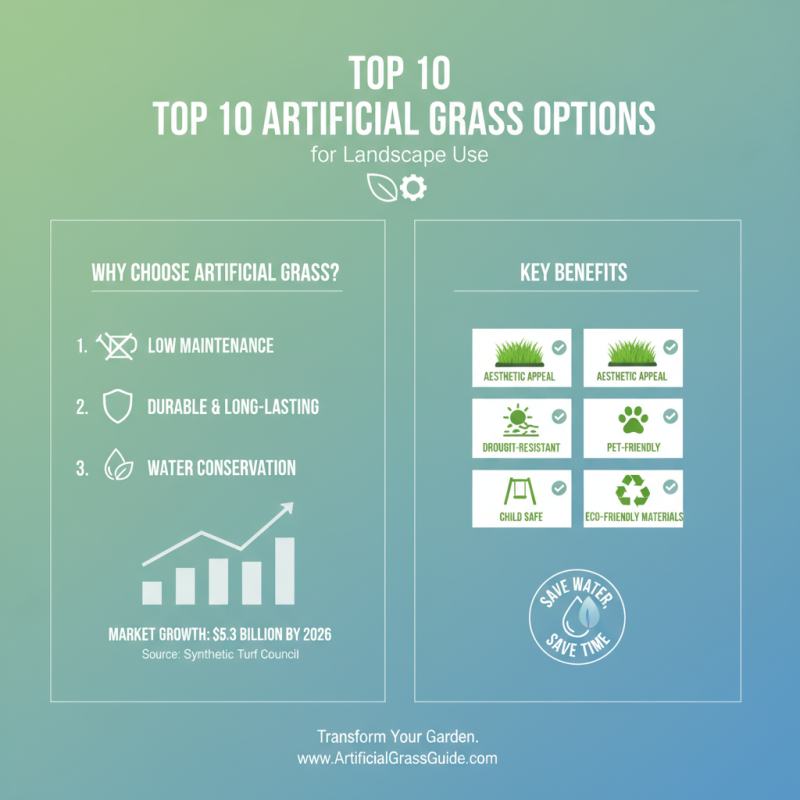
Selecting the right artificial grass for your garden can significantly enhance its aesthetic appeal and functionality. Research from the Synthetic Turf Council indicates that the market for artificial grass is expanding, expected to reach $5.3 billion by 2026. Homeowners increasingly choose synthetic options due to their low maintenance and durable nature. This is particularly relevant in regions experiencing water shortages, where natural grass lawns consume excessive amounts of water.
When evaluating artificial grass, consider factors like pile height, density, and UV resistance. High-quality options typically feature a pile height between 1.5 to 2.5 inches and a density of around 60 ounces per square yard. These characteristics can provide a realistic look and feel. However, not all products meet these standards. Some lower-end alternatives might fade over time, requiring early replacement.
Affordability is also crucial. While premium choices often guarantee longevity, cheaper versions may look appealing initially but can deteriorate quickly. Understanding your local climate can impact your choice too. Areas with intense sunlight might necessitate additional UV protection, which some grass options lack. Always research and compare product specifications before purchasing.
Comparison of Durability and Maintenance of Different Grass Types
Choosing the right artificial grass for your garden involves understanding its durability and maintenance requirements. Studies have shown that some synthetic grass types withstand wear better than others. For instance, polyethylene grass is known for its resilience, while polypropylene options might need more frequent replacement. Reports indicate that high-quality synthetic turf can last anywhere from 8 to 15 years, depending on usage and exposure to sunlight.
Maintenance tasks often vary. Some grasses require regular brushing, while others are more self-sustaining. For example, installing an effective drainage system can reduce mud and maintenance needs. Choosing a model with UV protection can help retain color and shape, but these options can sometimes be pricey.
Tip: Regularly check for debris. This small task can prevent long-term damage. Also, consider infill materials that can improve durability. However, be aware that not all infills provide the same benefits, and some may even degrade over time. Choosing poorly can lead to more maintenance struggles down the line.
Sustainability and Environmental Impact of Landscape Artificial Grass
When considering landscape artificial grass, sustainability is a key factor. This synthetic option often reduces water use significantly. Traditional lawns require frequent watering, leading to water wastage. With artificial grass, homeowners can cut back on irrigation and conserve this precious resource.
However, the production of artificial grass involves petroleum-based materials. This raises concerns about its environmental footprint. While it eliminates the need for pesticides and fertilizers, the longevity of synthetic grass is also debated. Some options last for years, while others may degrade faster than expected. This creates a paradox about their overall sustainability.
Another critical point is recycling. Not all artificial grass is easily recyclable, leading to disposal issues. Landfills may fill up with unwanted materials. On the other hand, some companies are now focusing on creating eco-friendly alternatives. They aim to address the environmental impact associated with synthetic lawns, yet these still require consumer education. It’s essential to weigh these factors when choosing the best option for your garden.
Tips for Installing and Maintaining Artificial Grass in Your Garden
Installing artificial grass can be a great option for your garden. It offers a green space without the constant upkeep of natural grass. However, proper installation and maintenance are key to maximizing its lifespan and appearance.
When laying artificial grass, ensure the base is well-prepared. A solid foundation helps prevent issues like warping and unevenness. According to industry studies, an average life expectancy for quality artificial turf is around 15 to 25 years. People often underestimate the need for regular maintenance. Simple tasks such as brushing the surface and removing debris can significantly enhance the look and feel of the grass.
Water drainage is another critical aspect. Poor drainage can lead to mold and unpleasant odors. Research shows that up to 70% of homeowners face drainage issues with artificial grass. Securing proper drainage systems can mitigate these risks. Regular inspections are essential to identify any wear before it becomes a significant problem. Proper care can make your investment in synthetic grass worthwhile over the years.
Top 10 Best Landscape Artificial Grass Options for Your Garden
| Type of Grass |
Blade Length (inches) |
Pile Density (per sq. ft.) |
UV Resistance |
Eco-Friendly |
Price Range (per sq. ft.) |
| Emerald Green |
1.5 |
10000 |
Yes |
Yes |
$2.50 - $4.00 |
| Natural Look |
1.75 |
9500 |
Yes |
Yes |
$3.00 - $5.00 |
| Deluxe Turf |
1.25 |
10500 |
Yes |
Yes |
$2.75 - $4.25 |
| Pet-Friendly |
1.5 |
9800 |
Yes |
Yes |
$3.50 - $5.50 |
| Shade Resistant |
1.2 |
9000 |
Yes |
Yes |
$2.00 - $3.50 |
| Commercial Grade |
1.8 |
11000 |
Yes |
Yes |
$4.00 - $6.00 |
| Luxury Synthetic |
2.0 |
12000 |
Yes |
Yes |
$5.00 - $7.00 |
| Budget-Friendly |
1.0 |
8000 |
No |
No |
$1.50 - $2.50 |
| Designer Turf |
1.6 |
10800 |
Yes |
Yes |
$4.50 - $6.50 |
| Olive Green |
1.3 |
9500 |
Yes |
Yes |
$3.00 - $4.00 |

 +86 19005411400+86 15006803065
 Contact Phone
 Contact Email