 +86 19005411400+86 15006803065
Leave Your Message
-
Contact WhatsApp
-
 Contact Phone
 -
 Contact Email
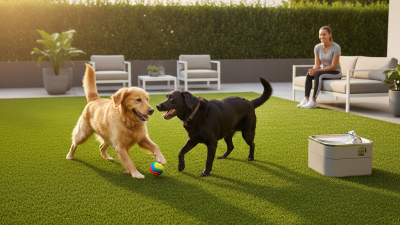
Choosing the best Pet Artificial Grass requires more than comparing green shades and price tags. A reliable surface should match your pet’s habits, yard conditions, and cleaning routine. A large dog that urinates in one corner needs fast drainage and a stable, permeable base. A playful puppy may need softer fibers and secure seams. Measure the area carefully, but do not trust measurements alone.
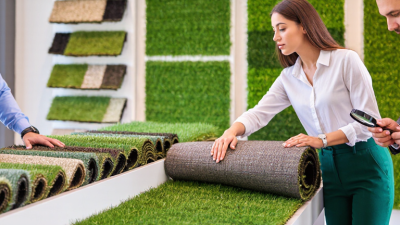
Look closely at pile height, backing quality, blade density, and infill materials. Shorter blades often make waste removal easier, while dense fibers can feel more comfortable under paws. Drainage holes should allow urine and rainwater to move away without creating lingering odors. Ask suppliers for product specifications, test reports, warranty terms, and installation guidance. A sample placed outdoors can reveal heat, texture, and color changes that online photos hide.
Cleaning matters every week.
Rinse the surface regularly, remove solid waste promptly, and inspect low spots after heavy rain. Pet-safe cleaners may help, but always follow the manufacturer’s instructions. No Pet Artificial Grass is perfect. Some softer products may flatten sooner, while tougher products can feel less natural. I would also avoid choosing solely by the longest warranty, because installation quality strongly affects performance. A carefully prepared sub-base, proper slope, and sealed edges often matter as much as the turf itself. Reflect on your priorities: comfort, odor control, durability, appearance, or maintenance time. The best choice balances them honestly, even when that balance is imperfect.
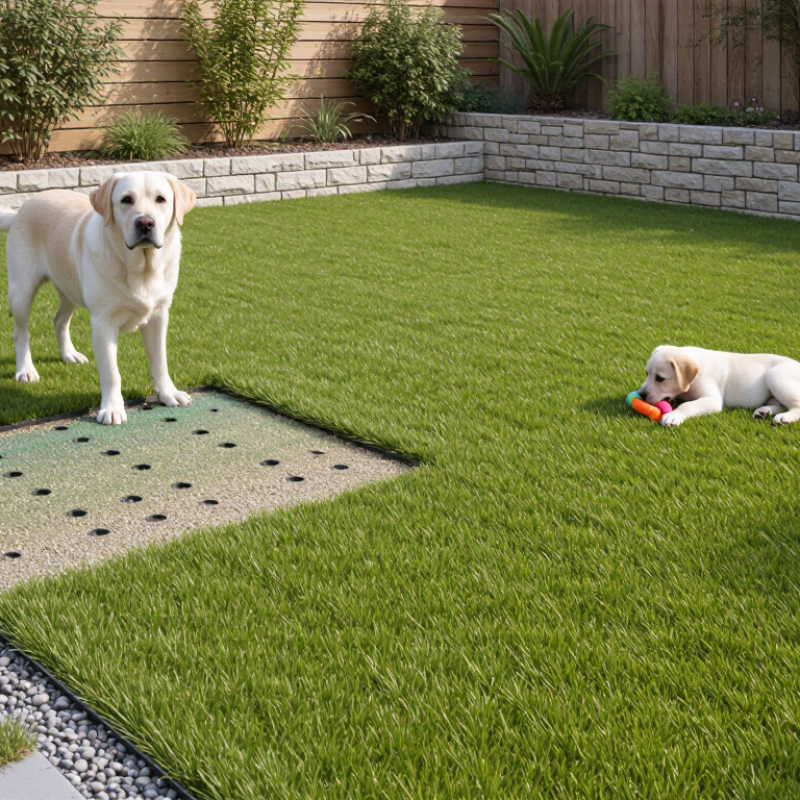
Choosing pet-friendly artificial grass starts with drainage, not color or pile height. A dog’s toilet area needs a backing system that moves urine away quickly. Look for a documented permeability rate and a stable sub-base, because blocked drainage creates lingering odor. The Synthetic Turf Council recommends reviewing installation specifications, seam quality, and drainage performance before purchase. These details matter more than a soft showroom sample.
Material safety deserves equal attention. Ask for independent testing on lead, heavy metals, and chemical emissions. The U.S. Consumer Product Safety Commission has repeatedly emphasized testing children’s products for accessible lead; pets also contact, lick, and sleep on outdoor surfaces. A safer surface should have rounded fibers, secure anchoring, and no loose infill that can be swallowed. Avoid assuming “antimicrobial” means odor-proof. It does not. Cleaning still matters.
Heat is another practical concern. Research published by Brigham Young University found synthetic turf temperatures can become substantially hotter than natural grass under direct sun. Provide shaded rest areas and rinse the surface during extreme heat. The American Pet Products Association’s 2023–2024 National Pet Owners Survey reports that 66% of U.S. households own a pet, so these maintenance issues affect many homes. From installation experience, I would also inspect the edges weekly. Pets may dig there. My checklist is useful, but imperfect. Soil type, climate, and the dog’s habits can change the right specification.
| Key Feature | Recommended Specification | Why It Matters for Pets | Selection Priority |
|---|---|---|---|
| Drainage Performance | Perforated backing with rapid drainage; preferably supported by a permeable, well-prepared base | Efficient drainage helps urine and rainwater pass through the surface, reducing standing moisture, odors, and muddy areas. | Essential |
| Pile Height | Approximately 25–40 mm for most residential pet areas | A moderate pile is comfortable for paws while remaining easier to clean and less likely to trap waste than very long fibers. | High |
| Fiber Density | Dense, resilient fibers with a stable tuft structure | Higher-density construction generally provides better appearance retention and helps the surface withstand regular pet traffic. | High |
| Fiber Resilience | Soft but springy polyethylene or similar synthetic fibers that recover after compression | Resilient fibers are more comfortable under paws and are less likely to remain flattened in favorite play or toilet areas. | High |
| Backing Construction | Durable primary backing with a secondary backing that supports tuft stability and drainage | A strong backing helps prevent stretching, shifting, and premature separation of the grass during repeated use and cleaning. | High |
| Odor Management | Open drainage design combined with routine rinsing; optional pet-safe odor treatment if needed | Artificial grass does not eliminate odor by itself. Good drainage and regular cleaning are the main factors that help control urine-related smells. | Essential |
| Infill Selection | Pet-safe, non-toxic infill that does not obstruct drainage; avoid loose materials that are easily swallowed | Appropriate infill can support the fibers and improve stability, while unsuitable loose materials may create cleanliness, tracking, or ingestion concerns. | High |
| Surface Temperature | Choose lighter colors or cooling-oriented designs where direct sunlight is strong; provide shade and water | Synthetic surfaces can become hot in direct sun. Color and product design can influence heat absorption, but no artificial grass is completely heat-proof. | High |
| Cleaning Compatibility | Suitable for routine rinsing with water and cleaning products labeled as pet-safe | Easy access to the backing and sufficient drainage make it simpler to remove urine residue, hair, dirt, and solid waste. | Essential |
| Material Safety | Non-toxic materials with no intentionally added harmful chemicals; request product safety documentation when available | Pets may lie on, lick, or chew the surface. Safety documentation provides more confidence than appearance alone. | Essential |
| Slip Resistance | Stable installation over a firm, level, well-drained base | A secure surface can reduce movement and uneven areas that may contribute to slips, trips, or paw discomfort during active play. | Important |
| Durability | UV-resistant fibers and reinforced backing suitable for the expected level of pet traffic | UV resistance helps limit fading, while durable construction supports longer service life in areas used frequently by pets. | High |
| Maintenance Requirements | Remove solid waste promptly, rinse regularly, brush flattened fibers, and inspect drainage paths | Even high-quality pet grass requires maintenance. Consistent care helps preserve appearance, hygiene, drainage, and odor control. | Essential |
| Installation Base | Compacted, level, free-draining base with adequate slope where appropriate | Drainage performance depends heavily on the sub-base. Poor preparation can cause pooling and odors regardless of the grass specification. | Essential |