Iquiry Now
Leave Your Message

China Top 10 Clear PVC Tarpaulin Manufacturers?

Clear PVC Tarpaulin is used where visibility, weather protection, and flexible coverage matter. It appears in warehouse curtains, outdoor shelters, equipment covers, and transparent partitions. Buyers often compare Chinese manufacturers because the market offers varied product specifications and production capabilities. Yet a supplier’s location alone does not guarantee consistent quality.

This guide explores ten manufacturers to consider, with attention to material clarity, fabric strength, coating quality, customization, and communication. Useful details include thickness, mesh reinforcement, seam options, sample availability, and production lead times. Ask for current specifications and inspect a sample before placing a large order. Small differences matter. A sheet that looks clear in a photograph may appear cloudy under workshop lighting, while a strong-looking edge may not hold after repeated use.

No single ranking fits every project. A greenhouse operator may prioritize light transmission, while a logistics buyer may need abrasion resistance and reliable dimensions. Company information and capabilities can also change, so treat this list as a starting point rather than a final verdict. That caveat is easy to overlook. Compare written quotations, verify claims directly, and consider how each supplier handles questions or product concerns. The best choice is usually the manufacturer whose documented specifications match the application—not simply the one with the lowest price or the boldest claims.
China Top 10 Clear PVC Tarpaulin Manufacturers?

What Is Clear PVC Tarpaulin and Where Is It Used?

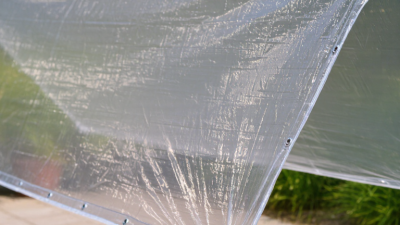
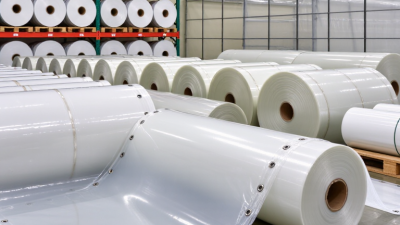
Clear PVC tarpaulin is a flexible sheet made by coating a reinforcing fabric, often polyester, with transparent polyvinyl chloride. The fabric adds strength; the coating helps resist water and abrasion. Unlike opaque tarpaulins, it lets daylight through while creating a barrier against wind and rain. Clarity varies. Some sheets look nearly glass-clear, while others have a slight haze or woven texture.

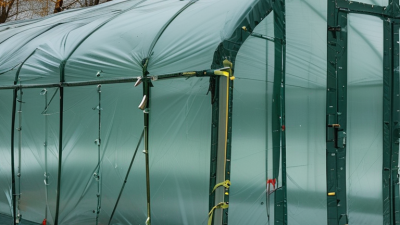
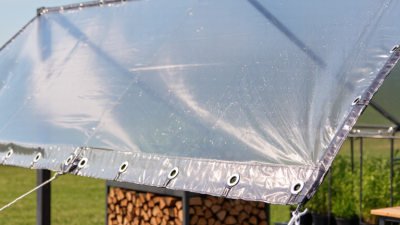
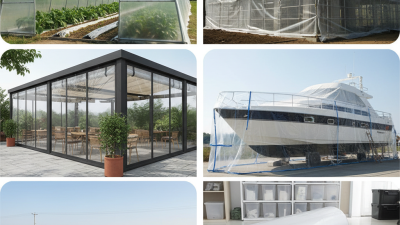
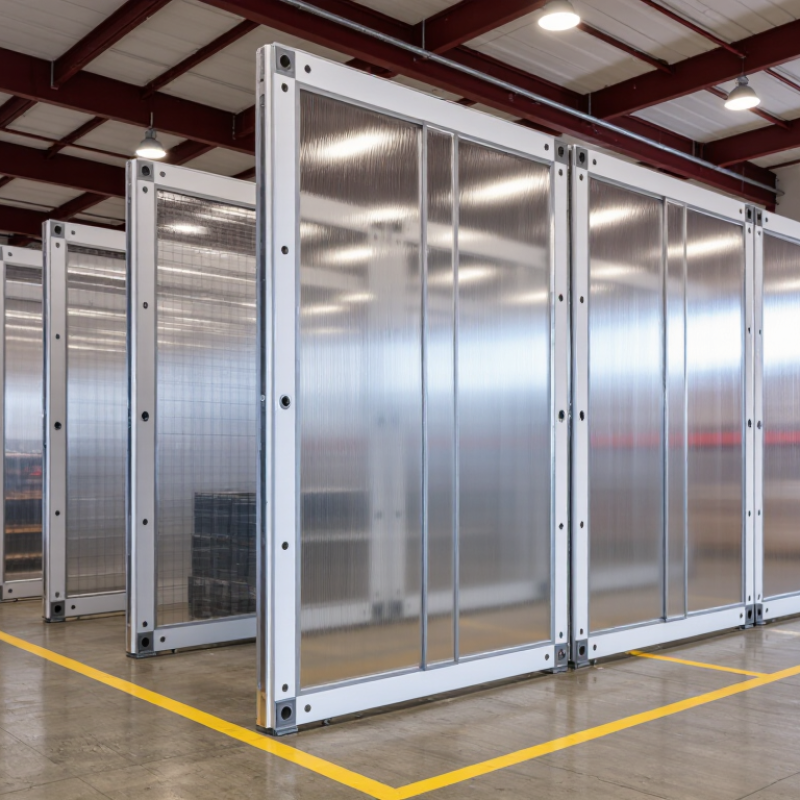
It is used for greenhouse sides, outdoor canopies, market-stall windows, equipment covers, and temporary partitions. In a workshop, a clear curtain can separate a dusty area without blocking the view. For trucks or event shelters, transparent panels admit daylight but still need secure edging and fasteners. Small details matter. Poor tension can cause flapping, while prolonged sun exposure may reduce clarity over time. Grand View Research estimated the global PVC market at about US$66.7 billion in 2023, but that figure covers PVC products broadly, not clear tarpaulin alone. It offers useful material context, not a direct measure of tarp demand. Clear sheets are not always the best choice; glare, heat buildup, and cleaning needs deserve a practical check before installation.

China Top 10 Clear PVC Tarpaulin Manufacturers? - What Is Clear PVC Tarpaulin and Where Is It Used?

Clear PVC tarpaulin is a transparent or translucent flexible sheet made from PVC film, commonly reinforced with polyester scrim. The specifications below represent typical industry configurations and application requirements; actual values vary according to formulation, reinforcement, coating method, and production standard.
No. Application Area Typical Structure Common Thickness Main Performance Requirement Typical Use Recommended Evaluation Points
1 Truck and Trailer Curtains PVC film reinforced with polyester scrim 0.50–0.75 mm Tear resistance, weather resistance, weldability, and flexibility Transparent side curtains and viewing panels Scrim strength, seam quality, edge reinforcement, and folding performance
2 Outdoor Event Tents Flexible transparent PVC coated fabric 0.45–0.80 mm Waterproofing, light transmission, UV resistance, and flame performance where required Windows, entrance panels, and transparent roof sections Clarity, yellowing resistance, dimensional stability, and heat sealing
3 Warehouse and Industrial Partitions Clear PVC sheet or reinforced coated fabric 0.30–0.60 mm Visibility, abrasion resistance, flexibility, and easy cleaning Dust barriers, temperature zones, and pedestrian separation Surface smoothness, scratch resistance, hanging strength, and roll width
4 Agricultural Greenhouses Transparent PVC film, with or without textile reinforcement 0.20–0.50 mm Light transmission, UV stability, waterproofing, and low-temperature flexibility Seasonal covers, sidewalls, and protective enclosures Optical clarity, anti-drip treatment, service life, and resistance to tearing
5 Swimming Pool Enclosures Reinforced clear PVC coated fabric 0.50–0.80 mm Water resistance, UV resistance, flexibility, and dimensional stability Retractable covers and transparent enclosure walls Resistance to moisture, chlorine exposure, seam integrity, and transparency retention
6 Construction Weather Protection Heavy-duty PVC coated polyester fabric 0.55–1.00 mm High tensile strength, puncture resistance, waterproofing, and wind resistance Scaffolding screens, temporary enclosures, and site partitions Base-fabric weight, coating adhesion, grommet strength, and repairability
7 Marine and Boat Covers Marine-grade clear PVC reinforced fabric 0.50–0.75 mm Salt-air resistance, waterproofing, UV stability, and flexibility Boat windows, cockpit covers, and protective curtains Resistance to mildew, plasticizer migration, stitching, and clear-film distortion
8 Restaurant and Outdoor Dining Areas Soft clear PVC film or lightweight reinforced fabric 0.30–0.50 mm Transparency, easy cleaning, flexibility, and waterproofing Outdoor dining screens and windbreak curtains Odor, surface cleanliness, cold-weather flexibility, and fastener performance
9 Logistics and Pallet Protection Clear PVC-coated polyester or transparent PVC sheet 0.35–0.65 mm Abrasion resistance, tear strength, visibility, and water protection Reusable covers, roll-up curtains, and shipment protection Repeated folding durability, edge strength, cleanability, and repair options
10 Temporary Medical and Public-Space Barriers Smooth clear PVC film or lightweight coated textile 0.20–0.50 mm Visibility, cleanability, flexibility, and resistance to frequent handling Transparent partitions, service windows, and temporary screening Surface compatibility with cleaning agents, clarity, odor, and mounting method
Key specification note: Clear PVC tarpaulin is generally selected by thickness, total weight, base-fabric strength, transparency, UV resistance, temperature flexibility, coating adhesion, seam performance, and compliance requirements. “Clear” may describe fully transparent film or translucent reinforced fabric, so the required visual clarity should be confirmed by sample testing.

How Clear PVC Tarpaulin Is Manufactured in China

How Clear PVC Tarpaulin Is Manufactured in China

Clear PVC tarpaulin starts with a polyester scrim, which gives the finished sheet tensile strength. Workers inspect the fabric for uneven yarns and weak areas before coating. PVC resin is blended with plasticizers, stabilizers, and other additives to create a flexible compound. The China Chlor-Alkali Industry Association reported national PVC production of about 22.5 million tonnes in 2023. That figure describes the wider resin supply, not tarpaulin output.

For transparent material, manufacturers typically use calendering or coating. In calendering, heated rollers press the PVC compound into a clear film. The film is then bonded to the scrim under controlled heat and pressure. Coating lines apply liquid PVC directly to the fabric, followed by heating to form a continuous layer. Operators monitor thickness, clarity, and bonding as the material moves through the line. A small temperature shift can affect both appearance and adhesion.

After cooling, the sheets are cut, welded, and finished with reinforced edges or eyelets when specified. Quality checks may include thickness measurement, visual inspection, and tensile or peel tests. Some imperfections remain easy to miss: a clear sheet can look smooth while hiding weak bonding at an edge. This is why buyers should request test records and confirm the intended use before ordering.

What Defines a Leading Clear PVC Tarpaulin Manufacturer?

A leading clear PVC tarpaulin manufacturer proves performance with measurable specifications, not glossy claims. Buyers should check film thickness, tensile strength, tear resistance, light transmission, and coating consistency. Ask for test methods and recent batch records. A transparent sheet should remain clear across its width, with no cloudy bands, pinholes, or brittle edges after folding. Small defects matter.

Market context helps, but it is not product proof. Grand View Research estimated the global PVC market at about US$77 billion in 2023 and projected growth through 2030. That figure covers many PVC products, not clear tarpaulins specifically. A capable supplier should therefore provide product-level test data rather than borrow broad market growth as evidence. Look for documented checks on weld strength, low-temperature flexibility, UV exposure, and dimensional stability. Request a sample and inspect it under daylight; even a neat sample may not match a full production run. Ask how the factory controls thickness variation and rejects weak seams. Reliable answers are specific, traceable, and sometimes admit limits. That is a better sign than a perfect promise.

China Top 10 Clear PVC Tarpaulin Manufacturers: What Defines a Leading Manufacturer?

This chart presents a practical 100-point evaluation framework for clear PVC tarpaulin manufacturers. The weights reflect common procurement priorities, including material performance, production consistency, compliance, and supply reliability. It is a criteria model rather than a ranking of individual companies.

A leading manufacturer should combine transparent, durable PVC materials with reliable welding, stable quality control, documented compliance, and the production capacity to support consistent international supply.

China’s Top 10 Clear PVC Tarpaulin Manufacturers

China’s top 10 clear PVC tarpaulin manufacturers are often compared through more than price. Experienced buyers inspect resin clarity, fabric weight, coating uniformity, and welded seam strength. A transparent sheet should admit light while resisting yellowing, tearing, and moisture. Samples reveal details that catalogs cannot. I have found edge finishing especially telling. Frayed reinforcement can signal rushed production.

Reliable manufacturers usually provide technical data for thickness, tensile strength, temperature range, and roll tolerance. They should explain whether the material uses laminated or coated construction. This affects flexibility, transparency, and repair methods. Ask for a production sample, not only a showroom piece. Check a one-meter section for pinholes, cloudy patches, uneven gloss, and trapped particles. Small defects matter. They may spread during cutting or heat welding.

A professional audit also reviews factory experience, inspection records, export packaging, and response speed. Strong suppliers can adjust width, eyelet spacing, and reinforcement for greenhouse covers, temporary partitions, truck curtains, or weather shelters. Yet “top 10” rankings remain imperfect. Public information changes, and factory capacity can vary by season. Buyers should verify current certificates, batch consistency, and pre-shipment inspection results before placing volume orders. Clear PVC is practical, but it is not automatically durable. UV exposure, folding temperature, and storage conditions still decide service life.

How to Compare Manufacturers and Select the Right Supplier

Comparing China’s top 10 clear PVC tarpaulin manufacturers requires more than a polished catalog. Treat each supplier as a production system, not just a sales contact. Request samples made to the same specifications, including thickness, width, color, and edge finishing. Check transparency under warehouse lighting. Inspect the surface for bubbles, cloudy areas, pinholes, and uneven coating.

Ask for evidence. Look closely.

A reliable manufacturer should explain its PVC formulation, fabric base, coating process, and welding method. Request recent test reports for tensile strength, tear resistance, cold flexibility, and UV performance. Confirm whether the figures apply to the finished tarpaulin, not only the raw film. Measure sample thickness with a gauge, because small differences can affect weight and service life. I once received a sample that looked strong but split near the eyelets. The supplier corrected the issue, yet the delay exposed a weak inspection step.

Compare factory capacity, minimum order quantities, lead times, packaging, and replacement policies. A factory visit or live video inspection can reveal roll storage, stitching areas, and quality checks. Ask how they record batch numbers and handle complaints. Clear answers matter more than impressive promises. Check whether production can remain stable during busy seasons. A cheaper offer may hide thinner fabric or inconsistent welding. I would also test one small shipment before committing to a large order, because factory claims and field performance do not always match.