+86 19005411400+86 15006803065


Why Choose Landscape Artificial Grass for Global Projects?
Global landscape projects face different climates, water restrictions, maintenance budgets, and public expectations. Landscape Artificial Grass offers a consistent green surface where natural turf struggles with drought, heavy foot traffic, or poor soil. However, it is not a universal shortcut. Product selection still requires technical judgment.
Turfgrass scientist Dr. Michael J. Goatley Jr. offers a useful principle: “No single turfgrass is best for all situations.” The same thinking applies to synthetic landscapes. A coastal resort may need strong UV resistance and corrosion-resistant backing. A school courtyard may require softer fibers, secure seams, and reliable drainage. A rooftop garden needs lighter construction and careful load calculations. Details matter.
Experienced project teams inspect rainfall patterns, surface temperature, sub-base stability, and cleaning access before approving materials. They also review fiber shape, pile height, stitch rate, backing quality, and warranty conditions. These checks help reduce premature flattening, flooding, and color fading. Local installers remain essential. A premium roll can fail when the foundation is uneven.
There are honest limitations. Artificial grass still needs brushing, debris removal, and occasional washing. It may become hot under intense sunlight. Some buyers also question end-of-life recycling and embodied materials. Those concerns deserve clear answers, not polished promises.
For international developments, the strongest choice is usually the product that fits the site, climate, use, and maintenance plan. Green appearance alone is not enough. Reliability is built beneath the surface.
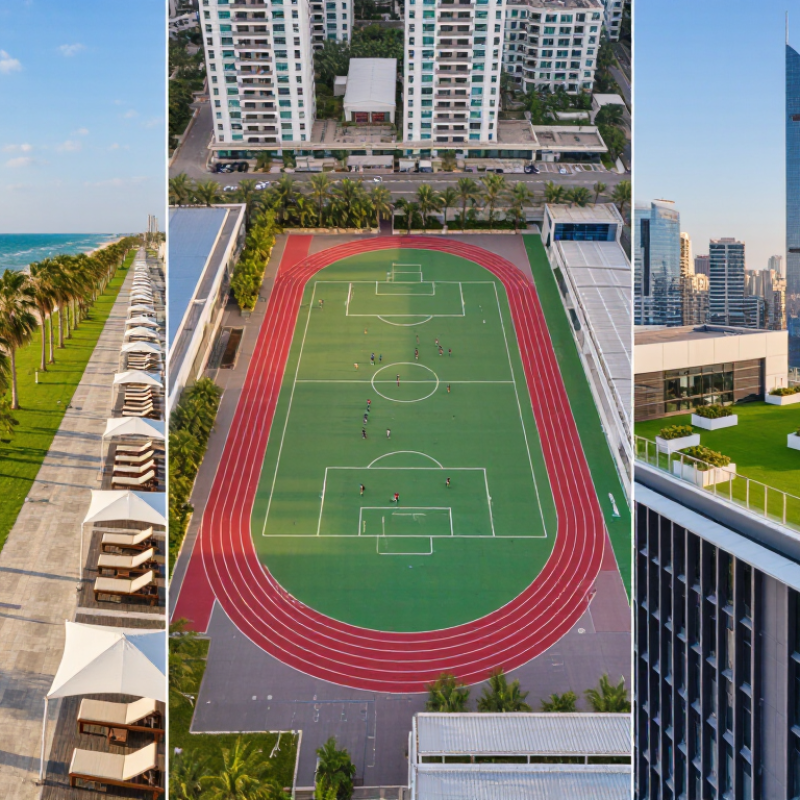
Landscape artificial grass is a manufactured surface designed to imitate natural turf. It commonly uses polyethylene or polypropylene fibers, a reinforced backing, drainage holes, and optional infill. Its value extends beyond appearance. It provides stable coverage where drought, shade, heavy foot traffic, or poor soil limits living grass. The U.S. Environmental Protection Agency reports that outdoor water use represents about 30% of household water consumption nationally, with higher levels in dry regions. This helps explain its relevance to international landscape projects. The material can reduce routine irrigation, mowing, and fertilizer demand.
Performance still depends on specification. The Global Artificial Turf Market report by Grand View Research identifies landscaping as a major application and projects continued market growth through 2030. However, growth does not guarantee suitability. Project teams should check ultraviolet resistance, pile height, face weight, drainage capacity, surface temperature, and local installation conditions. A dense lawn may look attractive, but it can drain poorly over compacted ground. That mistake becomes visible after heavy rain.
In coastal sites, salt exposure can affect sub-base materials and edging. In hot climates, dark infill may raise surface temperatures under direct sunlight. Proper grading, permeable aggregate, and regular debris removal remain essential. The U.S. Green Building Council also recognizes water-efficient landscape strategies as important in sustainable site design. Artificial grass is not maintenance-free. It simply changes the maintenance work. Global projects need clear performance testing, realistic cleaning plans, and honest lifecycle assessments before approval.
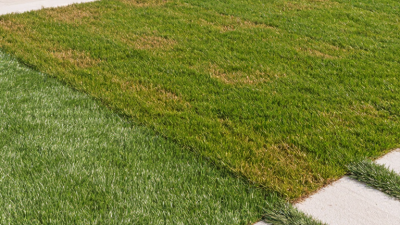
Artificial grass for global landscapes must handle more than appearance. Heat, rainfall, UV exposure, and heavy foot traffic change performance quickly. The World Meteorological Organization reported that 2023 was the warmest year recorded, at about 1.45°C above the pre-industrial average. This trend makes thermal stability and UV resistance practical priorities, not optional features.
Drainage also matters. In monsoon regions, a permeable backing and prepared sub-base help move water away from the surface. In dry areas, artificial grass can reduce irrigation demand. The U.S. Environmental Protection Agency reports that outdoor water use accounts for nearly 9 billion gallons daily in the United States. However, water savings depend on proper installation and the removal of unnecessary irrigation. Poor drainage can still create puddles, odors, and uneven edges. That is an easy detail to underestimate.
Tips: Test samples under local sunlight before approval. Measure surface temperature at midday. Check drainage after heavy rain. Use UV-stable yarn, secure seams, and an aggregate base suited to local soil. A lighter color may feel cooler, but it can show dust more clearly. Darker fibers often look richer, yet they may become uncomfortable under direct sun. There is no universal specification. Site trials remain essential, and even experienced teams should question whether the selected infill, pile height, and maintenance plan fit the climate.
Global landscape projects need more than attractive artificial grass. Planning must begin with climate, soil, drainage, access, and expected foot traffic. The U.S. Environmental Protection Agency’s WaterSense guidance reports that outdoor irrigation can represent nearly 30% of household water use. This supports low-water landscapes, but only when the base drains correctly. A synthetic surface over wet soil will still fail.
Survey levels before ordering materials. Check seasonal flooding, frost movement, and local rainfall intensity. For pedestrian areas, contractors commonly remove weak soil and install about 100–150 millimeters of compacted crushed aggregate. The exact depth depends on soil strength and loading. It should not be copied blindly. Field testing matters more than a supplier’s brochure.
Installation crews should compact each layer, maintain a gentle fall, and install stable perimeter edging. A permeable geotextile can help separate soil from the sub-base. Drainage outlets need inspection access, especially in tropical or monsoon regions. ASTM testing principles can guide checks for dimensional stability, water flow, and seam performance, while local codes remain decisive. The Global Synthetic Turf Market research published by Grand View Research identifies construction and landscape redevelopment as major demand drivers, yet rapid growth can encourage rushed preparation. Crews should unroll materials for acclimatization, trim around trees carefully, and secure seams without visible tension. Small errors become obvious after heavy rain. Some sites still need redesign.
| Project Factor | Typical Planning Benchmark | Ground Preparation Requirement | Installation Requirement | Quality Check |
|---|---|---|---|---|
| Intended Use | Residential gardens, commercial landscaping, roof terraces, hospitality areas, playground surroundings, and public open spaces require different specifications. | Define pedestrian frequency, furniture loads, maintenance access, pets, children, and expected service life before selecting the system. | Choose pile height, backing construction, drainage performance, seam method, and infill according to the use category. | Confirm the use category in the project specification. |
| Site Survey and Measurement | Measure the usable area, perimeter, curves, slopes, access routes, and locations of drainage outlets or service covers. | Remove obstacles and identify irrigation pipes, electrical conduits, tree roots, unstable soil, and areas subject to standing water. | Prepare a cutting and seam layout that minimizes joints and keeps pile direction consistent throughout visible areas. | Use a scaled site plan and verify dimensions on site. |
| Recommended Surface Slope | A finished fall of approximately 1%–2% is commonly used to support surface drainage; local drainage codes may require different values. | Shape the subgrade to a continuous fall without low spots, abrupt level changes, or areas that can trap water. | Lay the base and artificial grass so the drainage path remains continuous and is not blocked by adhesive or compacted fines. | Check levels with a laser level or straightedge before installation. |
| Subgrade Condition | The subgrade should be stable, evenly graded, free of organic matter, and capable of supporting the intended loads. | Excavate unsuitable soil, remove roots and debris, and correct soft or saturated areas before placing the aggregate base. | Do not install over loose topsoil, mud, active puddles, or cracked and unstable hard surfaces without suitable remediation. | Perform a proof-roll or walking inspection for movement and soft spots. |
| Aggregate Base Depth | Approximately 75–100 mm is common for pedestrian landscape areas; 100–150 mm may be required for heavier use or weaker subgrades. | Place approved, well-graded crushed aggregate in controlled lifts and maintain the required finished levels. | Compact each lift before adding the next layer, while preserving the planned slope and drainage route. | Measure depth at multiple points and confirm the final elevation. |
| Compaction | A commonly specified target is about 95% of the applicable laboratory maximum dry density, subject to the local engineering standard. | Compact the subgrade and aggregate base with suitable equipment for the soil type and site access conditions. | The surface beneath the grass must be firm and uniform to reduce settlement, ripples, and seam movement. | Use density testing where required and inspect for wheel tracking or surface deflection. |
| Drainage Capacity | The drainage system must accommodate local rainfall intensity, site catchment, soil permeability, and outlet capacity. | Install free-draining aggregate, drainage channels, perforated pipes, or a suitable sub-base where natural infiltration is insufficient. | Keep drainage holes and channels open; avoid blocking outlets with adhesive, geotextile folds, or excessive infill. | Conduct a controlled water-flow test before final handover. |
| Geotextile or Weed Barrier | A permeable separation layer can help limit weed growth and prevent migration between soil and aggregate. | Install the fabric over a clean, compacted subgrade with overlaps typically around 150–300 mm, unless the specification states otherwise. | Secure overlaps and avoid wrinkles, exposed edges, and areas that could telegraph through the finished surface. | Confirm permeability, overlap, anchoring, and coverage before placing the base. |
| Grass Pile Height | Approximately 25–40 mm is widely used for general landscape applications; shorter piles suit formal or high-traffic areas. | Provide a base depth that allows the finished surface to meet adjacent paving, edging, thresholds, and drainage details. | Keep all rolls aligned in the same pile direction and brush the fibers upright after cutting and infill placement. | Verify pile direction, finished height, and transition levels. |
| Roll Layout and Seams | Plan seams away from the main viewing direction and high-traffic turning points whenever possible. | Ensure the base is smooth and free from stones or ridges that could create visible lines beneath the seams. | Butt backing edges tightly without overlapping, maintain consistent pile direction, and use compatible seaming materials. | Inspect seams in both dry and wet conditions from normal viewing distances. |
| Perimeter Restraint | Edges require a stable restraint to prevent creep, lifting, or separation during temperature changes and use. | Install a suitable concrete, timber, metal, composite, or treated edge detail according to local construction requirements. | Fix the grass at regular intervals appropriate to the edge system and avoid creating trip hazards at transitions. | Apply manual pull and edge-lift checks after fixing. |
| Infill Requirement | Infill type and quantity depend on pile height, backing design, climate, traffic, pets, and the required fiber recovery. | The finished base must be dry enough for even distribution and free from contamination that could mix with the infill. | Apply infill in several light passes, power-brush between passes, and follow the system supplier's specified loading rate. | Confirm even coverage, upright fibers, and no exposed backing. |
| Climate and Temperature | Hot climates can increase surface temperature and expansion; cold climates can affect flexibility and adhesive curing. | Allow materials to acclimatize and keep the base dry, stable, and within the installation temperature limits of the selected products. | Avoid installation during heavy rain, frost, standing water, or conditions outside the adhesive and backing manufacturer's limits. | Record weather conditions and installation temperatures. |
| Trees and Planting Areas | Living trees need adequate root-zone protection, water access, and allowance for future trunk growth. | Do not bury exposed root flares or compact the root zone unnecessarily; provide a defined planting or drainage zone. | Cut clean openings around trunks, secure the perimeter, and prevent the grass from restricting trunk expansion. | Inspect tree clearances and irrigation access. |
| Accessibility and Safety | Finished transitions should be stable, flush where practicable, and compatible with local accessibility and slip-resistance requirements. | Eliminate abrupt level changes, loose edges, soft spots, and drainage grates that create trip or wheelchair hazards. | Secure all seams and edges, keep fibers brushed, and coordinate transitions with paving, ramps, steps, and door thresholds. | Complete a final trip-hazard and accessibility inspection. |
| Quality Control and Handover | A project handover should include installation records, product data, cleaning guidance, and maintenance recommendations. | Document subgrade repairs, aggregate depth, drainage components, compaction results, and concealed work with photographs. | Complete brushing, infill distribution, seam cleaning, edge trimming, and removal of construction debris. | Use a signed checklist, photographs, and a drainage test record. |
Landscape artificial grass can support reliable public spaces when regional conditions guide the specification. In hot climates, UV-stable fibers and permeable backing reduce surface failure. However, dark surfaces can become extremely hot under direct sunlight. Shade planning and temperature checks remain essential.
In rainy regions, a well-prepared sub-base allows water to drain quickly. Poor drainage can create odors, algae, and unstable areas. A low-water surface is not automatically sustainable. Project teams should review recycled content, product lifespan, transport distance, and end-of-life options. These details vary widely between countries.
Safety standards also differ across regions. Playgrounds may need impact-absorbing layers and certified fall protection. Sports areas require suitable traction, consistent seams, and controlled infill movement. Around pools, cleaning routines should address slippery organic buildup.
I have seen attractive installations lose performance because edges were not anchored correctly. Small gaps can expand after repeated heat cycles. Regular inspections should include seams, perimeter restraints, drainage channels, and damaged fibers.
Maintenance usually involves removing leaves, brushing high-use zones, rinsing dust, and checking infill depth. Local technicians often notice problems earlier than remote consultants.
Test a sample outdoors before approval. Measure heat after midday. Confirm drainage after heavy rain. Use regionally accepted safety tests. Keep maintenance records with dates and photographs. Do not assume one specification suits every climate. A cheaper installation may demand more frequent repairs, although that assumption also needs evidence. Seasonal reviews can reveal unexpected wear, especially where sand, salt, or heavy public use is common.
Why Choose Landscape Artificial Grass for Global Projects?
Choosing landscape artificial grass for global projects requires more than comparing roll prices. Procurement teams should calculate material, freight, site preparation, drainage, labor, infill, and future repairs. A low quotation can become expensive when uneven ground needs extensive correction. In project inspections, the sub-base often determines performance more than the visible turf. It must be compacted properly and matched to rainfall, soil movement, and local use. Small details matter.
A well-made landscape system may remain functional for 8 to 15 years, depending on sunlight, foot traffic, maintenance, and installation quality. Ultraviolet resistance should be supported by documented testing, not only sales claims. Ask for product specifications, warranty conditions, and independent performance data. Routine brushing, debris removal, and prompt drainage checks can extend service life. Neglect changes the calculation quickly.
Long-term project value also includes water savings, reduced mowing, predictable appearance, and fewer seasonal labor demands. These benefits are strongest in public spaces, resorts, housing developments, and difficult climates. However, artificial grass is not maintenance-free. It can become hot under direct sun, and poor drainage may create odors or surface problems. Designs should include cooling strategies, permeable construction, and accessible repair zones. Some assumptions will be wrong. A careful site trial can reveal them before thousands of square meters are installed.
Indicative 10-year lifecycle cost comparison for landscape areas, based on typical planning assumptions in USD per m².
The model assumes artificial grass installation at $35/m², annual maintenance at $3/m², and a 10-year service period. Natural turf is modeled at $8/m² for installation and $6/m² annually for irrigation, mowing, fertilization, and routine care. Actual costs vary by country, climate, labor, water prices, site preparation, and product specification.