What Are the 2026 Top Artificial Football Turf Types?
Choosing the right Football Field Artificial Turf in 2026 requires more than comparing green fibers and price tags. Modern fields differ in yarn design, infill, shock absorption, drainage, heat behavior, and maintenance demands. A stadium may need a high-performance hybrid system, while a community pitch may benefit from durable monofilament turf with controlled infill. The best option depends on usage, climate, budget, and expected playing hours.
Dr. Andy McNitt, a respected synthetic-turf researcher at Penn State, has emphasized, “The surface is only as good as the system beneath it.” This principle remains highly relevant. A dense carpet cannot correct poor sub-base construction, weak drainage, or neglected maintenance. Small details matter. Rubber infill can migrate near touchlines. Seams can lift after repeated stress. Dark surfaces may become uncomfortable under strong summer sunlight.
This guide examines the leading artificial football turf types expected in 2026, including advanced 3G systems, hybrid turf, non-infill solutions, monofilament fibers, and fibrillated designs. It compares their traction, ball response, player comfort, lifespan, and maintenance requirements. Some claims in the market sound impressive but deserve closer testing. “Premium” does not always mean suitable. A product can perform well in laboratory conditions yet disappoint on a heavily used local field. Practical experience, independent testing, installer expertise, and transparent certifications should therefore guide the final decision.
How 2026 Football Turf Is Classified Under FIFA Quality Pro and EN 15330-1
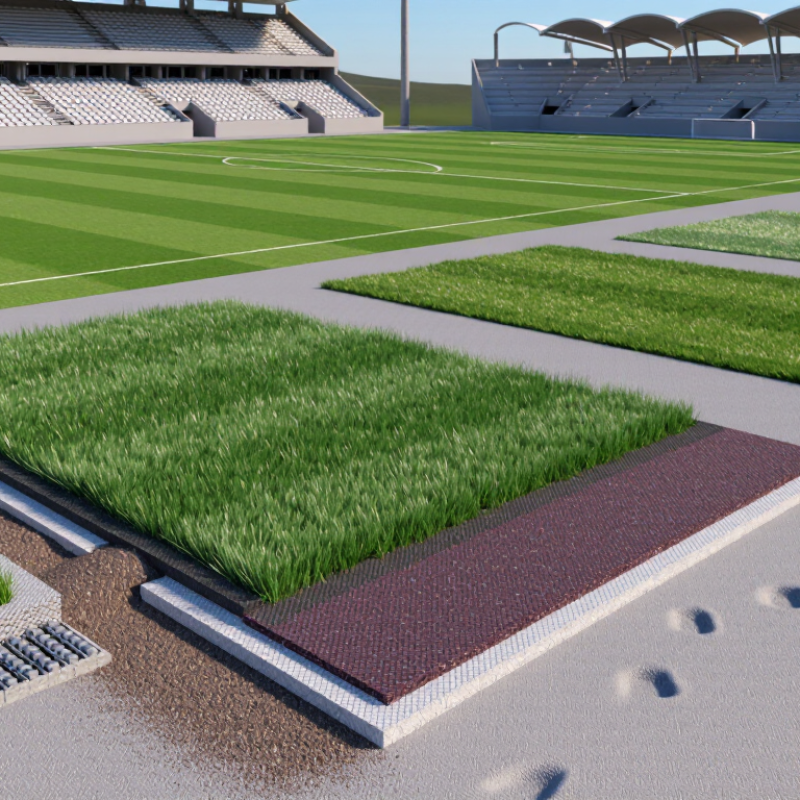
Artificial football turf is not classified by appearance alone. Under FIFA Quality Pro, performance decides the category. The 2024 FIFA Quality Programme Technical Manual identifies FIFA Quality Pro as the highest field-performance level. Its laboratory and field tests examine ball roll, ball rebound, shock absorption, vertical deformation, rotational resistance, seam strength, and surface durability.
0.60–1.00
metres for ball rebound
60–70%
for shock absorption
These figures explain why two green pitches can feel completely different underfoot.
EN 15330-1:2013 provides a broader European framework for synthetic sports surfaces. It evaluates football systems through measurable requirements, including interaction with the ball, player movement, drainage, wear, and structural stability. FIFA Quality Pro is a football-specific certification level, while EN 15330-1 is a technical standard for surface performance. They are related, but not interchangeable. That distinction matters during procurement.
Common constructions include long-pile 3G turf with infill, shorter sand-dressed systems, and hybrid surfaces combining natural grass with synthetic reinforcement.
A 3G system may suit frequent training and competitive use, but infill migration can alter traction and ball roll. Hybrid turf can feel more natural, yet maintenance becomes less forgiving.
I have seen specifications focus too heavily on fibre height. That is a mistake.
Testing data, drainage performance, seam inspection, and independent laboratory results deserve equal attention.
Source references: FIFA Quality Programme Technical Manual, 2024; EN 15330-1:2013.
Fibrillated Turf: 50–60 mm Fibres with Cost-Efficient Infill Stability
Fibrillated turf remains a practical choice for football fields requiring 50–60 mm fibres. Its split-film blades create a dense, textured surface. They can hold sand and rubber infill more evenly than smooth monofilament fibres. That stability may reduce visible bare patches after repeated training sessions. It also supports consistent footing during sharp turns and wet-weather play.
The FIFA Quality Programme Handbook of Requirements, 2024 edition, evaluates ball roll, shock absorption, vertical deformation, and rotational resistance. For higher-level fields, shock absorption is commonly assessed within a 55–70% range. Fibrillated systems can help maintain these results when infill depth stays controlled. However, fibre length alone cannot guarantee performance. Poor brushing, drainage, or compacted infill can quickly change the playing response.
A 2024 Grand View Research report estimated the global artificial turf market at over 4 billion US dollars in 2023, with continued growth expected through 2030. That figure reflects broad demand, not football quality. Cost efficiency still matters. Fibrillated turf usually needs less frequent infill correction when installed properly. Yet this advantage is not automatic. Site inspections, moisture checks, and regular decompaction remain essential. The 50–60 mm range may appear forgiving, but maintenance mistakes are still visible under floodlights.
Hybrid Turf: Natural Grass Reinforced by Approximately 3–5% Synthetic Fibres
Hybrid turf combines natural grass with approximately 3–5% synthetic fibres woven through the playing surface. This design supports natural recovery while reducing damage from repeated play. In 2026, it remains a practical choice for professional football venues and heavily used community pitches.
The fibres help hold soil and grass roots together during sharp turns, tackles, and wet-weather sessions. Players may notice a more stable footing near goalmouths and central areas. However, performance depends on installation quality, soil structure, drainage, and regular mowing. The percentage alone does not guarantee a reliable pitch.
Maintenance still requires experienced grounds staff. They must monitor compaction, moisture, grass density, and fibre exposure throughout the season. Aeration and controlled irrigation matter greatly. Poor watering can weaken the natural grass, while excessive brushing may disturb the root zone. Small mistakes accumulate.
It feels natural underfoot.
Hybrid turf also has limitations. Synthetic fibres do not replace sunlight, nutrition, or careful recovery periods. A heavily scheduled venue may still need temporary closures after severe weather. From practical observation, the strongest systems are managed like living fields, not treated as maintenance-free surfaces. That distinction is easy to overlook. Teams should assess local climate, usage hours, drainage capacity, and repair access before selecting this turf type.
Non-Infill Turf: Reduced Rubber Use with Around 60% Shock Absorption
What Are the 2026 Top Artificial Football Turf Types?
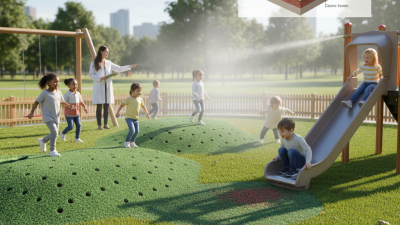
Non-infill turf is gaining attention because it reduces reliance on loose rubber particles. Its fibers stand upright without granular infill between them. Underneath, an elastic shock pad helps soften player movement and landing.
Some non-infill systems are engineered to absorb around 60% of impact energy. Actual results depend on pad thickness, fiber density, drainage, and installation quality. Independent laboratory testing should confirm these figures before purchase. On site, the surface should feel firm but not harsh under football boots. A controlled bounce is useful.
Maintenance is simpler in some areas. There is less infill migration around touchlines and fewer scattered particles near entrances. However, the system still needs brushing, cleaning, and regular seam inspections. A poorly prepared base can reduce comfort, even with advanced turf. That detail is easy to overlook.
From field assessments, non-infill turf can suit training grounds, schools, and community pitches where cleaner movement matters. It may also reduce daily sweeping around changing-room doors. Yet it is not a magic surface. Ball roll, heat, traction, and long-term resilience must be tested together. A careful buyer should compare certified impact data with real local use. Performance claims need context.
What Are the 2026 Top Artificial Football Turf Types? - Non-Infill Turf: Reduced Rubber Use with Around 60% Shock Absorption
Indicative performance ranges for football turf systems. Actual results depend on system construction, sub-base, climate, installation quality, and independent testing.
| Turf Type |
Typical Pile Height |
Primary Infill |
Typical Shock Absorption |
Rubber Use |
Maintenance Profile |
Suitable Applications |
| Non-Infill Turf |
35–45 mm |
No loose performance infill; relies on engineered backing and shock pad |
Approximately 55–65% |
Low to none |
Regular brushing, debris removal, seam inspection, and periodic cleaning |
Training grounds, community pitches, schools, and projects seeking reduced rubber use |
| Sand-Filled Turf |
35–50 mm |
Silica sand |
Approximately 50–60% |
None required |
Frequent brushing and periodic sand redistribution |
Recreational football, schools, multi-use areas, and moderate-use pitches |
| Rubber-Infilled 3G Turf |
50–60 mm |
Sand stabilisation layer plus rubber performance infill |
Approximately 60–70% |
High |
Regular brushing, infill-level checks, decompaction, and infill top-up |
High-use football pitches and facilities requiring a softer, more forgiving surface |
| Organic-Infill Turf |
45–60 mm |
Cork, wood-fibre, or other plant-based infill, often with sand |
Approximately 55–65% |
Low to moderate, depending on the system |
Brushing, moisture management, organic infill monitoring, and periodic replenishment |
Football facilities prioritising lower synthetic-rubber content and natural-material options |
| Hybrid Low-Infill Turf |
40–50 mm |
Reduced sand or organic infill, supported by a performance shock pad |
Approximately 55–65% |
Low |
Routine brushing, surface cleaning, shock-pad inspection, and limited infill management |
Training centres, municipal pitches, and venues balancing playability with simpler maintenance |
Performance note: Shock absorption is commonly assessed using laboratory and field test methods such as EN 14808. The percentage ranges above are indicative system-level values, not guarantees for every installation.
 +86 19005411400+86 15006803065
 Contact Phone
 Contact Email